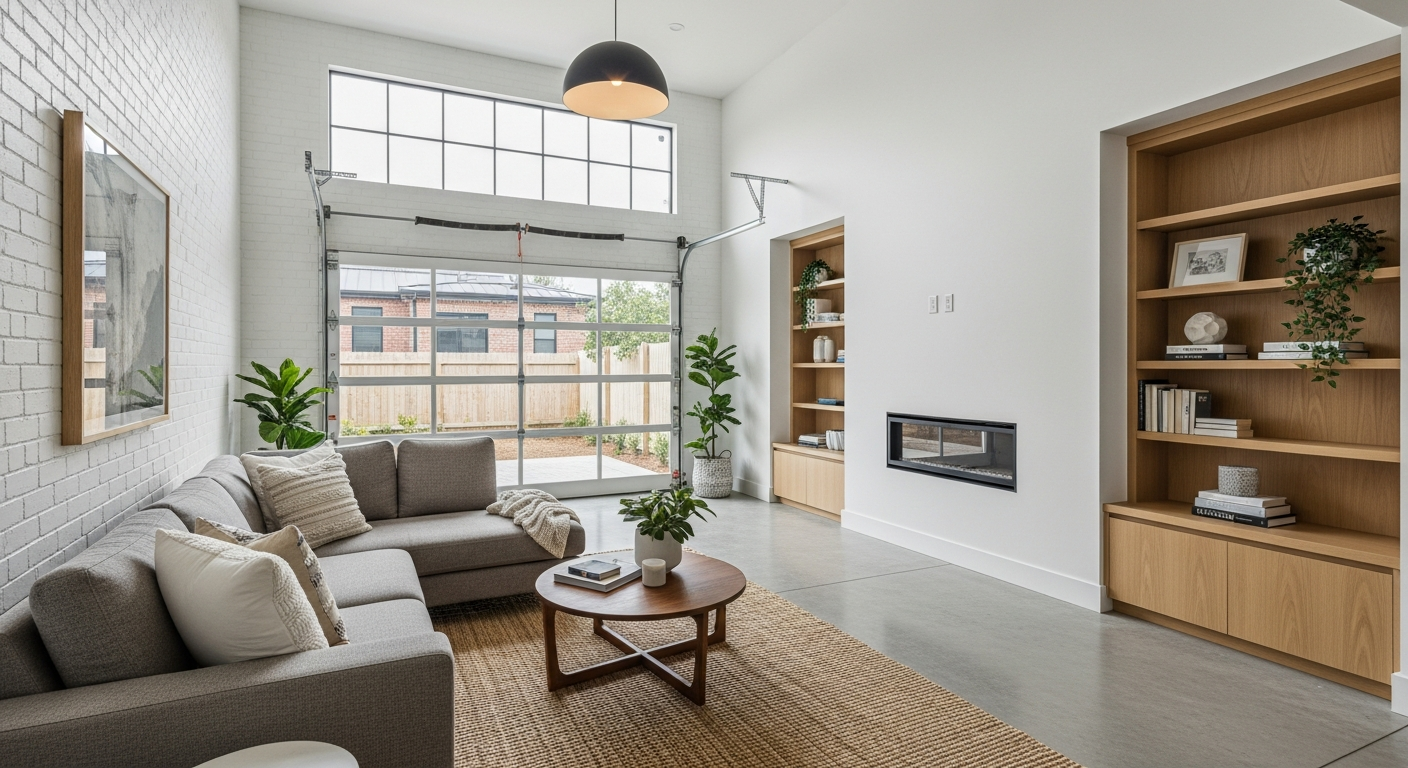
If you are researching airbnb adu california rules, the short answer is: sometimes, but not everywhere, and not under one single statewide rule. In California, accessory dwelling units are allowed under state ADU law, but short-term rental use is often controlled separately by city and county ordinances. That means an ADU that is fully legal to build and occupy may still be restricted from being listed on Airbnb or other short-term rental platforms.
For homeowners, investors, and families planning flexible housing, the key is to separate three issues: whether the ADU itself is legal, whether your local jurisdiction allows short-term rentals, and whether any owner-occupancy, licensing, tax, parking, or safety rules apply. Before you rely on rental income projections, you should confirm both your California ADU rules and your city’s short-term rental ordinance. If you are still in the design or permit stage, accurate existing-condition documentation can also help you avoid delays, especially if you need plans for an attached conversion, garage conversion, or existing unpermitted space.
The short answer: an ADU is not automatically Airbnb-eligible in California
California state law made it much easier to create ADUs, but it did not create a universal right to use every ADU as a short-term rental. In practice, many jurisdictions treat ADUs as housing intended for longer-term occupancy rather than hotel-like stays. Some cities prohibit short-term rentals in ADUs outright. Others allow them only if the property owner lives on site, registers the rental, pays transient occupancy taxes, and follows caps on the number of nights or guests.
That distinction matters because homeowners often assume that once an ADU permit is approved, any rental strategy is open. Usually, that is not how the rules work. You may have:
- A legal ADU but no right to operate it as a short-term rental.
- A citywide short-term rental program that excludes ADUs.
- An owner-occupied short-term rental program that allows hosted stays but restricts unhosted stays.
- HOA, deed, or insurance limitations that affect use even when local law allows it.
As a result, the practical answer to “Can you rent an ADU on Airbnb in California?” is always local. State ADU law opens the door to creating the unit, but the city or county usually decides whether and how you can use it for short stays.
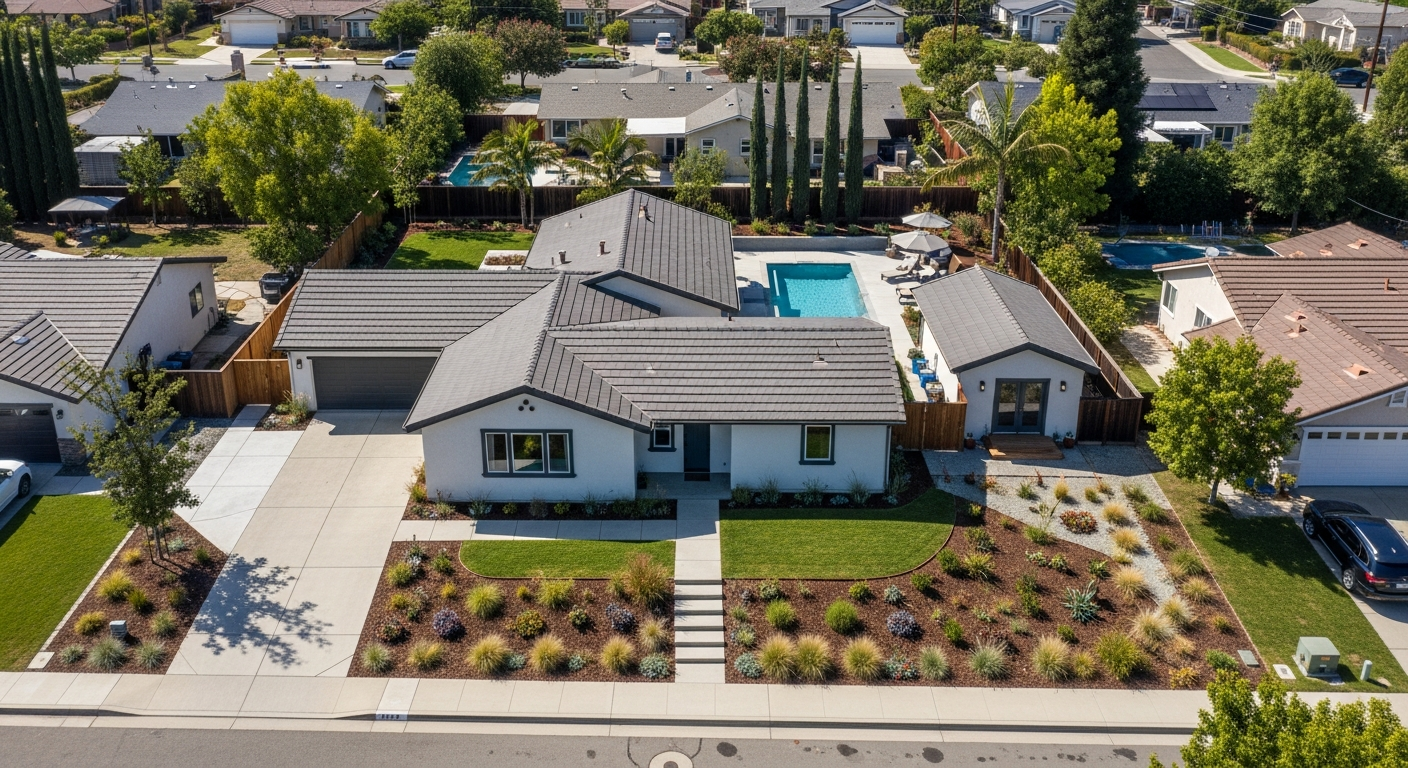
How California ADU law and short-term rental rules fit together
California’s ADU framework is designed to increase housing supply. It limits how much local agencies can block compliant ADUs and streamlines approval in many situations. If you want a broader overview, FastAsBuilt has a useful guide to California ADU laws and another explainer on how AB 68 changed California ADU rules.
But those state laws are mostly about whether an ADU can be established on a residential lot, what development standards apply, and how permitting works. Short-term rental rules are different. Cities and counties often regulate:
- Whether short-term rentals are allowed in residential zones.
- Whether the host must occupy the primary dwelling or the ADU.
- Whether accessory units are excluded from short-term rental permits.
- Business licensing and local tax collection.
- Operational standards like noise rules, contact persons, and guest limits.
In other words, California ADU rules answer “Can this unit exist?” Local short-term rental ordinances answer “Can this unit be used this way?” Those are separate approvals, and one does not guarantee the other.
Why many California cities are cautious about Airbnb use in ADUs
There is a policy reason behind the restrictions. State lawmakers promoted ADUs primarily as a way to add housing for longer-term residents, family members, seniors, caregivers, and renters. Many local governments see unrestricted short-term rentals as pulling small housing units out of the long-term market. Because ADUs are often compact, neighborhood-scaled units in areas with high housing demand, cities may prefer that they function as residential housing rather than visitor lodging.
That is why you will often see a local code approach that sounds roughly like this: ADUs are permitted, but they may not be rented for terms shorter than 30 days. Some jurisdictions are less strict and allow short-term use only when the property is your primary residence. Others may have separate rules for hosted stays versus whole-unit rentals.
If your goal is flexibility, it is smart to model both scenarios:
- Long-term rental income from the ADU.
- Short-term rental income only if your local ordinance clearly allows it.
That avoids designing a project around an Airbnb use that may never be approved.
What to check before listing an ADU on Airbnb
Before you furnish the unit or create a listing, verify the actual legal path in your city or county. A few phone calls or emails to the planning and business licensing departments can save a major headache later. You should check:
- ADU permit status: Was the unit legally permitted and finalized?
- Certificate of occupancy or final approval: Has the unit passed required inspections?
- Short-term rental ordinance: Are ADUs eligible at all?
- Registration or permit: Do you need a local short-term rental license?
- Owner-occupancy: Must you live on site, and if so, where?
- Minimum stay rules: Is there a 30-day minimum or another threshold?
- Tax collection: Are transient occupancy taxes required?
- Parking and operational rules: Are there guest, trash, noise, or contact requirements?
- Private restrictions: Do your HOA documents, lease terms, or insurance policy limit short-term rentals?
If the ADU is newly planned, your permit set should clearly match the intended legal use. If you are converting existing space, measured plans of the current home are often the first step. FastAsBuilt’s guide on what as-built drawings are explains why they matter when designers and permit teams need accurate dimensions of the existing structure.
Need accurate as-built plans?
FastAsBuilt sends a local crew to laser-measure your property and delivers permit-ready 2D or 3D drawings, starting at $900.
See 2D & 3D pricingPermits come first: a legal ADU matters more than a rental listing
Many homeowners jump straight to the rental question, but the foundation is the permit question. If the ADU was built without permits, or if a garage, basement, or addition was converted informally, short-term rental use can add exposure instead of value. Listing an unpermitted unit online may draw attention to code issues, life-safety deficiencies, or occupancy problems that should have been resolved before any rental use.
At a minimum, your city may expect the ADU to meet current or applicable standards for habitability, egress, ceiling height, ventilation, plumbing, electrical systems, and smoke and carbon monoxide alarms. Energy compliance under Title 24 may also be part of a legal ADU permit path, depending on the project type and scope. Requirements can vary based on whether the unit is detached, attached, converted from existing space, or part of a legalization process for older work. Confirm the specifics with your local jurisdiction.
If you are still preparing a project, these resources can help clarify the path:
- what plans you need for an ADU permit
- whether you need a site plan for an ADU
- how to permit an existing ADU in California
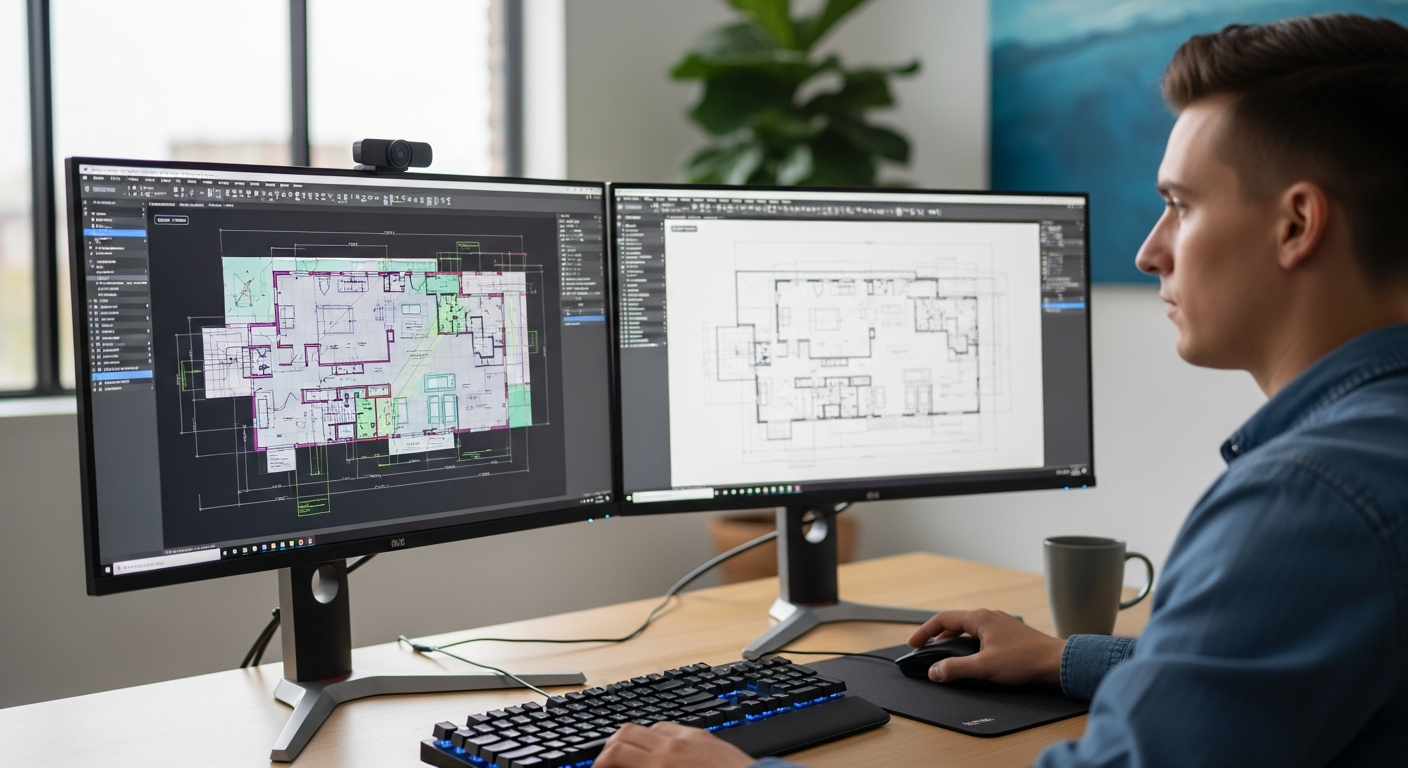
If your design team needs current floor plans before starting, FastAsBuilt provides field-measured as-built drawings and measured floor plans across California. We use on-site laser measurement, then senior drafters produce permit-ready CAD files in PDF and DWG format. For many residential projects, that creates a cleaner starting point than relying on old marketing plans or incomplete permit archives.
Garage conversions and attached ADUs need extra care
Some of the most common Airbnb ADU California questions involve garage conversions, lower-level conversions, and additions tied into the main house. These projects can work well, but they often require more careful review because existing spaces may not have been built as habitable area in the first place.
For example, a converted garage may need upgraded insulation, fire separation details, new windows for light and ventilation, compliant emergency egress, updated slab or floor conditions, and new utility layouts. If the work was done years ago without permits, the city may require substantial upgrades before recognizing it as a legal dwelling unit. FastAsBuilt’s article on legally converting a garage into living space covers the broader permitting issues.
That matters for short-term rentals because platform income does not cure permit problems. If your jurisdiction does allow ADU short-term rentals, you still need the unit itself to be lawful. If it does not, the best outcome may be to legalize the unit for long-term occupancy and treat Airbnb as off the table.
Owner-occupancy, JADUs, and other use restrictions to watch
One reason this topic gets confusing is that not all secondary units are treated the same. An ADU and a junior ADU, or JADU, are different products under California law. A JADU is generally smaller, created within the walls of a single-family home, and often subject to owner-occupancy concepts in ways that standard ADUs may not be. If your project is actually a JADU, the use rules and practical rental options can be narrower. For a quick size overview, see the maximum size rules for a JADU.
You should also pay attention to whether your local short-term rental rules focus on:
- The owner living anywhere on the parcel.
- The owner living in the primary residence specifically.
- The owner occupying the rented unit for part of the year.
- Whether the rental is hosted or unhosted.
- Whether only one short-term rental is allowed per parcel.
These details can change the answer dramatically. A detached backyard ADU might be allowed as a long-term rental but disallowed as an unhosted vacation rental. An attached unit might be allowed only when the main house remains owner-occupied. Because local codes evolve, confirm the current text before you buy, build, or advertise.
How to research your city or county before you invest
If you are at the early planning stage, the safest approach is to research in a sequence. Start with zoning and ADU feasibility. Then confirm short-term rental eligibility. Then move to design, pricing, and operations. Doing it in that order helps prevent a mismatch between your construction budget and your expected rental use.
A simple due-diligence checklist
- Ask planning whether an ADU is allowed on your lot and what development standards apply.
- Ask whether the jurisdiction has a separate short-term rental ordinance.
- Ask directly whether ADUs or JADUs may be used as short-term rentals.
- Ask whether owner-occupancy is required and how the city defines it.
- Ask business licensing or finance staff about registration fees and local hotel taxes.
- Review any HOA rules, CC&Rs, or lease restrictions.
- Verify insurance coverage for short-term rental activity.
If you are comparing development options, you may also want to review how big an ADU can be in California so your concept aligns with lot constraints and local standards. During this phase, accurate measured plans can help your architect or designer test layouts efficiently. If you already know you need plans, you can request service directly through FastAsBuilt’s order page.
What role as-built drawings play in ADU permits and rental compliance
As-built drawings do not give you permission to operate an Airbnb, but they are often essential to getting the underlying unit documented correctly. For ADUs, especially conversions and additions, permit teams usually need reliable information about the existing house, garage, rooflines, wall locations, windows, utility areas, and site conditions. Inaccurate base plans can lead to redesigns, correction cycles, or construction surprises.
FastAsBuilt serves California with on-site laser measurement and permit-ready CAD deliverables prepared by senior drafters. For homeowners and design professionals, that typically means:
- Existing floor plans you can build from.
- Dimensions based on field measurement, not guesswork.
- PDF and DWG files for architects, designers, and engineers.
- Typical 2D delivery in 48 to 72 hours. Turnaround times are estimates and may vary based on project complexity and scheduling.
- Options for 3D plans when a fuller model is useful.
Our 2D as-built plans start at $900 for up to 1,500 square feet, then $0.50 per square foot, include one revision, and are commonly delivered in 48 to 72 hours. Our 3D as-built plans start at $1,500, then $1.00 per square foot, include a 3D model plus 2D floor plans, elevations, and sections, include two revisions, and are typically delivered in 3 to 5 business days. Commercial properties, ADUs, SB 9 projects, and tenant improvements are quoted individually.
Turnaround times are estimates and may vary based on project complexity and scheduling.
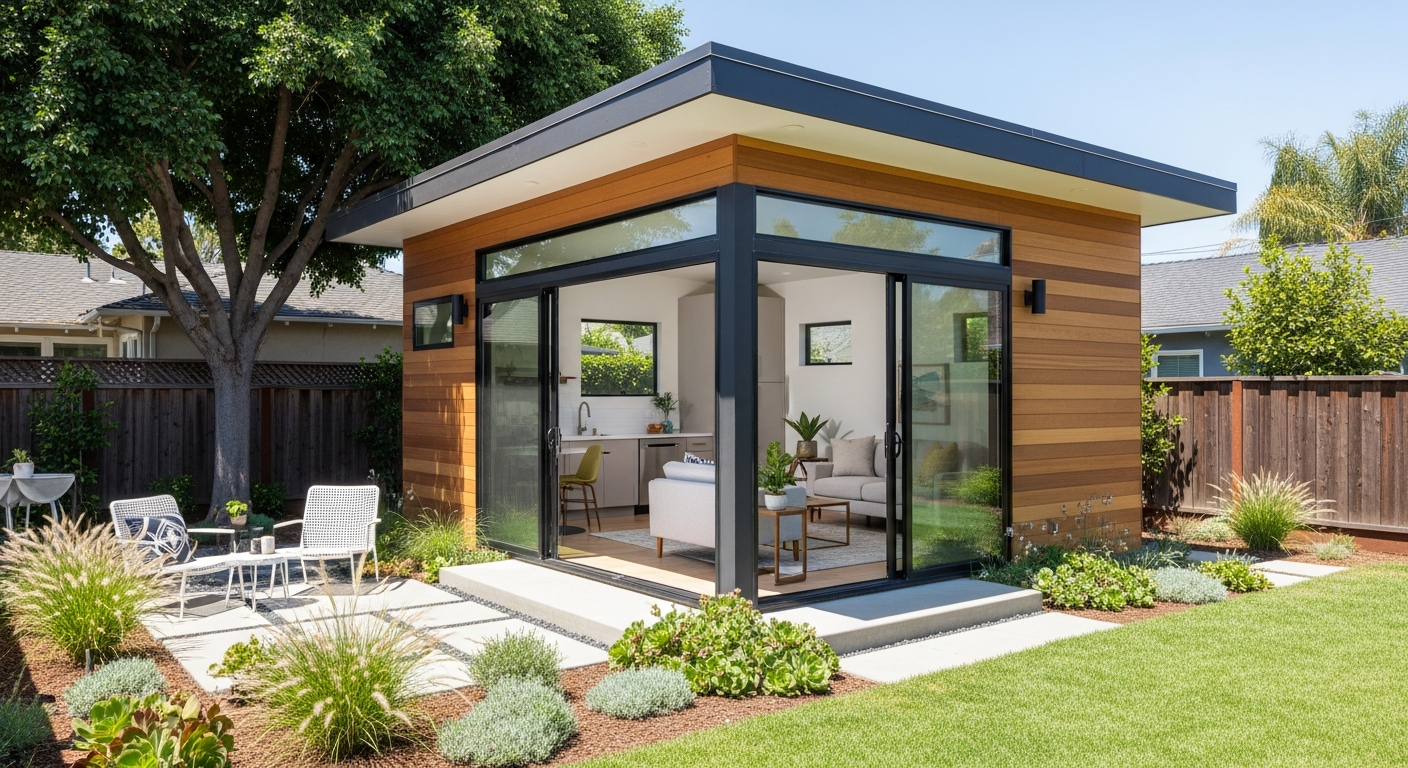
Frequently asked questions
Can you legally put an ADU on Airbnb anywhere in California?
No. California does not have a single statewide rule that makes every ADU eligible for Airbnb or other short-term rental platforms. State law supports ADU creation, but local governments usually control short-term rental use. Some cities allow it under conditions, some limit it heavily, and some prohibit it in ADUs.
Does a legal ADU permit mean you can rent the unit short term?
Not necessarily. A legal ADU permit means the unit itself was approved as a dwelling under applicable building and planning rules. Short-term rental activity is a separate use question. You may need a separate local registration, business license, or tax account, and your city may still prohibit short-term stays in ADUs.
Can you rent an unpermitted ADU on Airbnb if it looks finished?
That is a risky approach and usually a bad one. A finished appearance does not make a unit legal. If the space was built or converted without permits, listing it can expose code violations, safety issues, insurance problems, and enforcement action. The safer route is to determine whether the unit can be legalized and what plans and inspections will be required.
Are JADUs treated the same as ADUs for Airbnb use?
Often no. A JADU is a different type of unit and may be subject to different occupancy or use limitations. Even if your local short-term rental ordinance allows some accessory units, it may not treat JADUs the same way as full ADUs. Confirm the current rule with your city or county before assuming the unit is eligible.
What if local rules change after you build the ADU?
That can happen. ADU rules and short-term rental ordinances are adopted through different processes and can change over time. A city might continue to allow the ADU as housing while tightening rules on short-term rentals. If Airbnb revenue is important to your project, build your numbers conservatively and verify current regulations again before you begin operating.
Start with accurate as-builts
Order field-measured 2D or 3D as-built drawings and let a local crew handle the measuring and drafting.
Get instant pricingBottom line
If you are asking whether an airbnb adu california strategy is legal, the safest answer is that an ADU can sometimes be rented on Airbnb in California, but only when both the unit and the short-term rental use are allowed. First confirm that the ADU is properly permitted. Then confirm whether your city or county allows short-term rentals in ADUs, under what conditions, and with what registration or tax requirements. If you are still in planning, precise as-built drawings can help your design and permit team start with dependable information and avoid preventable delays.